
Undine Rising from the Waters AI video art
Song: Every Night – Stankisswell
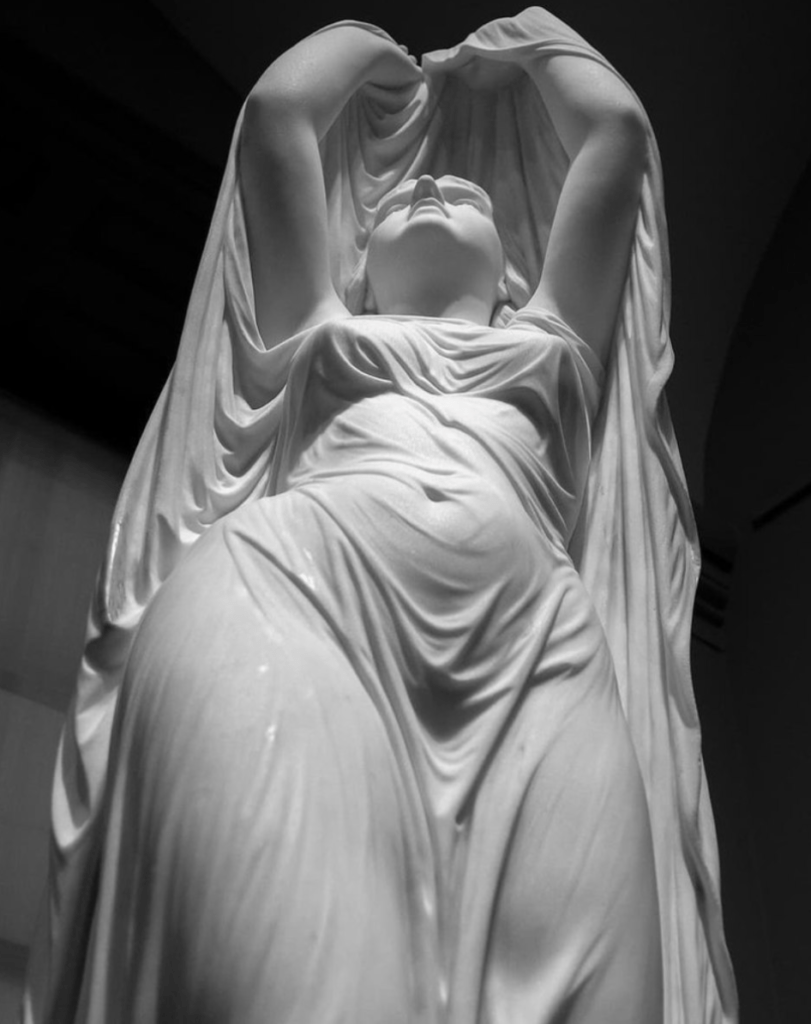
The Undine Rising from the Waters (1880), Original Sculpture by Chauncey Bradley Ives
Undine Rising from the Waters (1880) is one of the most iconic sculptures of American Neoclassicism. Inspired by the myth of the water nymph, it stands out for its delicacy and mastery in marble carving.
The “wet drapery technique”
I have always been fascinated by Phidias’ legacy and his famous “wet drapery technique,” where the carved fabric falls naturally, clinging to the body as if it were soaked. My goal was to see how AI would interpret this effect in motion.
The Challenge of Animating Sculptures with AI
After experimenting with the Mona Lisa and Portrait of a Lady, I decided to move from two-dimensional painting into three-dimensional sculpture. The challenge was to test how well AI could process textures like marble while staying faithful to the original
Creative Process and Visual Experimentation
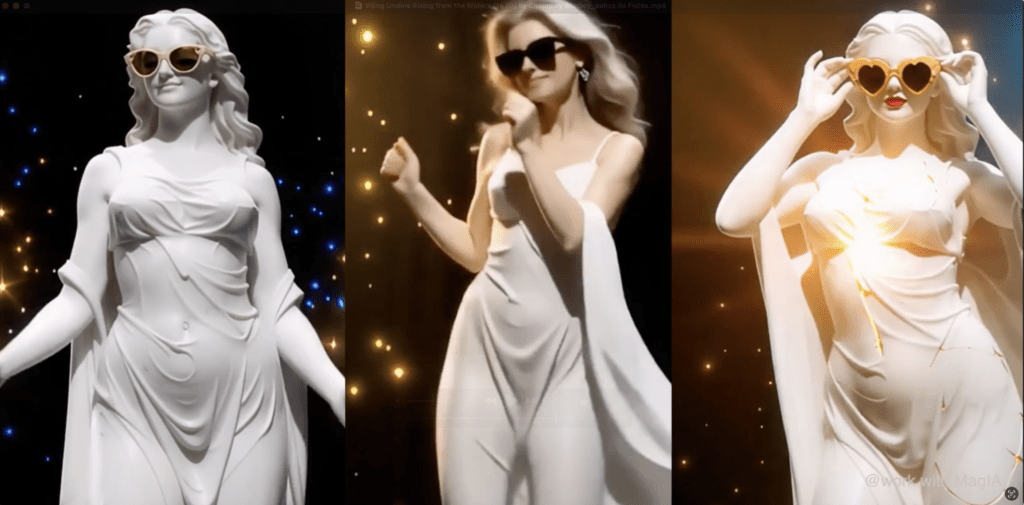
Iterations and outcomes
I explored several variations: making the statue move with a groovy deep-house rhythm, transforming her into a living human, adding sunglasses, light effects, and even cracks in the marble with golden sparkles.
Music and vijing
The result is something I could never have achieved otherwise. As a VJ and creator of immersive visuals, I discovered in this AI workflow a way to reconnect with music-driven creation — something many of us lost during the Covid years.
Why Reinterpreting Art Matters in the AI Era
AI doesn’t replace art; instead, it opens new expressive possibilities. With a critical eye and respect for the original artwork, it becomes a revolutionary tool for museums, live shows, and immersive digital projects.
What I value the most is feeling the urge to create again, syncing visuals with music, and realizing how art is always there to rescue us — even in dialogue with artificial intelligence.

Leave A Comment